
11,000 new eSkrzynka users in just two months
Poczta Polska has seen another surge in interest in its eSkrzynka service. In just two months, the number of users increased by approximately 11,000. Currently, eSkrzynka is used by a total of over 34,000 recipients.
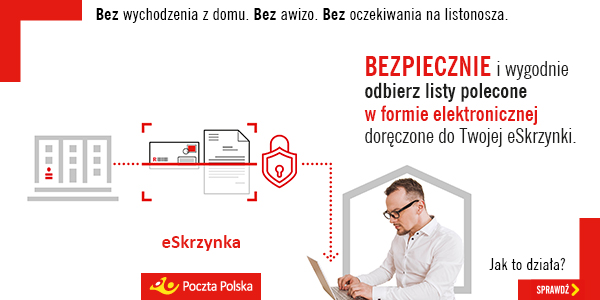
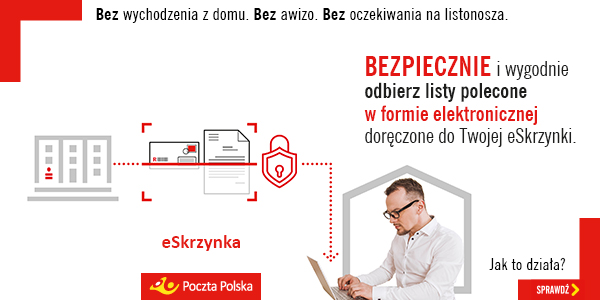
eSkrzynka was introduced in response to recommendations to counter the spread of COVID-19. It allows recipients to safely and quickly receive registered correspondence online, without leaving their home or office. An eSkrzynka can be set up online, free of charge, using a trusted profile. Upon customer request, Poczta Polska processes incoming registered mail into an electronic document and makes it available in eSkrzynka. The entire process is conducted in compliance with the highest standards of security and confidentiality for e-mail correspondence. Additionally, for convenience, customers can register three different correspondence addresses as part of the service.
" Poczta Polska is a company that adapts to customer expectations and the changing reality. We are directing our efforts towards the development of digitalization, thus fulfilling the strategic assumptions set for 2021-2023 and at the same time linking them to the role of National Digital Operator, which Poczta Polska will soon assume by digitally handling correspondence for offices and citizens, " says Krzysztof Falkowski, Vice President of Poczta Polska.
Poczta Polska's e-mail service is perfectly tailored to the holiday season and the needs of those planning to travel for their vacations and therefore won't be available at home to receive registered mail. It's precisely during the holiday season that Poczta Polska has observed a significant increase in registered users of this solution.
This is the second time Poczta Polska has launched the eSkrzynka service. The first launch of this solution took place at the end of April 2020 and was available until September 30, 2020. The second edition of the service will run until September 30, 2021.
eSkrzynka handles registered mail, the content of which is correspondence, with the exception of – in accordance with applicable regulations – mail sent by: courts and tribunals, prosecutor's offices and court bailiffs, as well as mail sent by law enforcement agencies, which mark their mail with the inscription: "Not subject to digitization".