
Another phishing campaign using the Polish Post brand
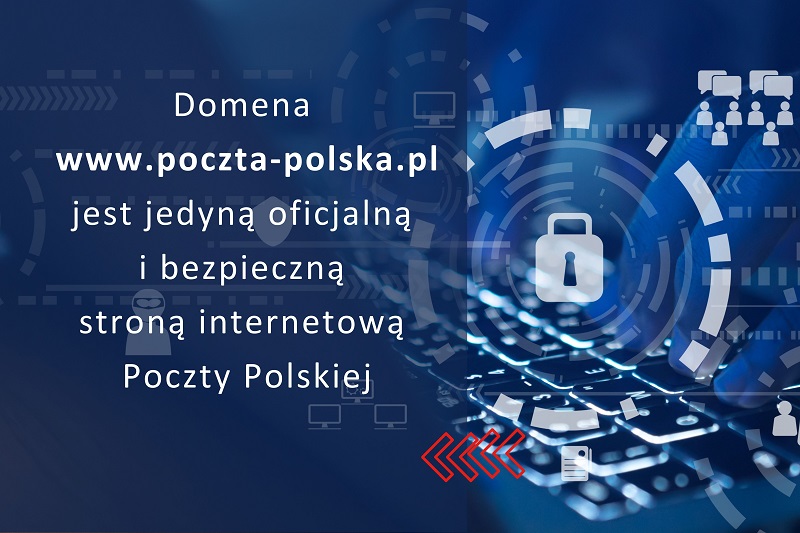
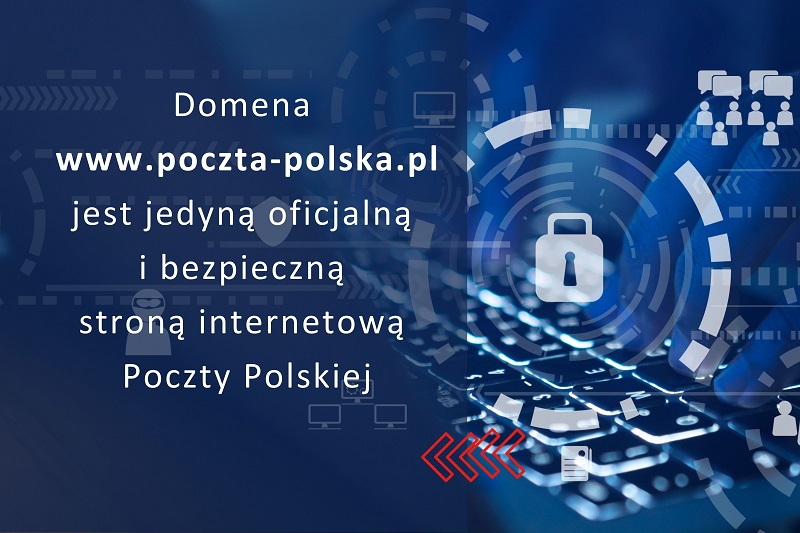 Poczta Polska (Polish Post) is warning against further attempts by fraudsters to obtain sensitive or confidential data, urging users to be cautious and carefully check the extensions of emails they receive and websites they visit. Cybercriminals are once again impersonating the company's brand, sending messages to customers urging them to click on a suspicious link – similar to the genuine Poczta Polska domain. The latest phishing campaign involves the use of the website address poczta-po1ska.pl, which differs from the real one only by one character – the number 1 instead of the similar letter l.
The risk of phishing attacks is increasing. Cybercriminals are increasingly attempting to obtain sensitive data from internet users and then use it for fraudulent purposes. Phishing attacks harm not only the reputation and interests of well-known and respected companies but also individuals, who often fall victim to fraud. One way to misappropriate internet users' personal data and their accounts is to use manipulation techniques, which involve exerting specific influence and behavior by sending emails using domains very similar to the original and proprietary domains of companies and institutions. The greatest threat in such situations is that the internet user-recipient of the phishing message provides access to an individual's online banking account, login credentials, and sensitive personal data.
The latest phishing campaign involves the use of the poczta-po1ska.pl extension, in which the letter "l" has been replaced with the number "1", which may be missed in a hurry.
We provide examples of websites that do not belong to our Company :
- poczta-po1ska.pl (note: number "1" instead of letter "l")
- poczta-poIska[.pl (attention!!! capital letter "i" instead of lowercase letter "L");
- Polish Post[.]ga;
- Polish Post[.]cf;
- Polish-Post[.]top;
- pomoc-poczta24[.]pl;
- post-politics[.]net[.]pl;
- emonitoring-epoczta-polska[.]net;
- emonitoring-plpocztapolska[.]com;
- emonitoring-paypocztapolska[.]net;
- emonitoring-epocztapolska[.]com;
- tpocztapolska[.]com;
- platnosc8512-pocztapolska[.]net;
- monitoring-epocztapolska[.]net;
- eupocztapolska[.]com;
- emonitoring-upocztapolska[.]net;
- emonitoring-epocztapolska[.]net
To avoid falling victim to cybercriminals and protect your data and assets, you should follow a few rules.:
- carefully read website addresses sent both in e-mails and text messages;
- do not click on links received from unknown senders;
- never respond to requests for personal data, passwords and/or account logins;
- watch out for errors in the link content (e.g. swapped order of letters or substitution of other letters or numbers), if you find any, it is probably a scam;
- Some links included in messages from unknown senders may install unwanted malware;
- use antivirus software, check it is up to date and install updates, and scan your computer regularly;
- change your passwords regularly and make sure they are strong enough, avoiding passwords like: 12345, QWERTY, name, date of birth, Spring2021.
If you receive a suspicious email or suspect any irregularities or discrepancies, please report the incident immediately to the following email address: cyberbezpieczenstwo@poczta-polska.pl .