
Łódź on 7 million of our stamps
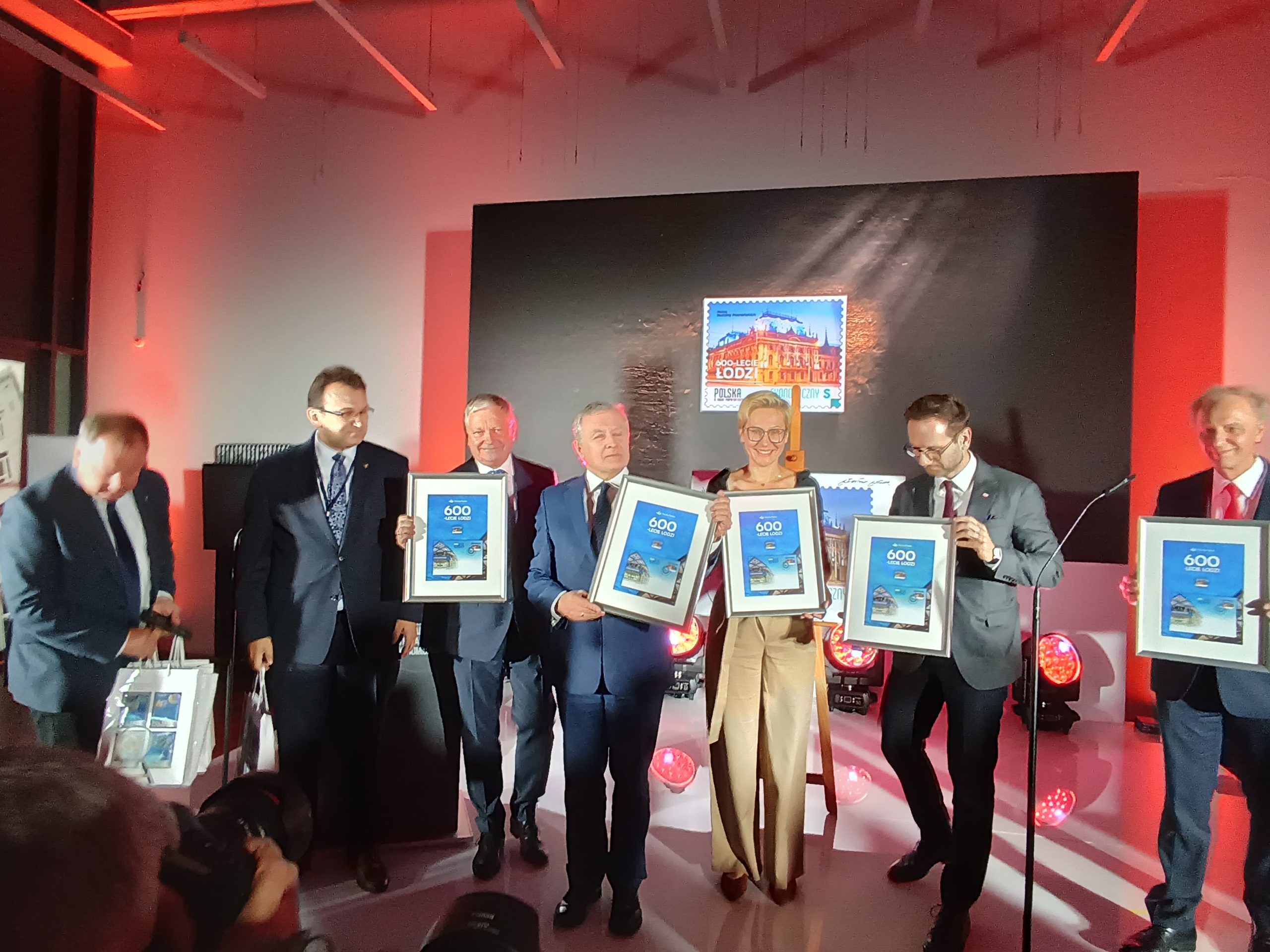
 We have unveiled a new postage stamp celebrating the 600th anniversary of Łódź's city charter. The 7 million-copy circulation stamp features a photograph of the Poznański Family Palace, a building considered one of the city's symbols.
The Poznański Family Palace is a 19th-century industrialist palace. Due to its size and extensive decoration, it is known as the "Louvre of Łódź." It was once the most representative part of a vast industrial and residential complex, built over several decades by one of Łódź's wealthiest industrial families.
" Łódź is one of the most important Polish cities. It could be said that this 600-year-old metropolis is located in the very heart of the country. Besides its undeniable geographical significance, the city abounds in numerous architectural gems. Through its philatelic value, we wish to honor the long history and development of this area. Both the stamp design and the envelopes will immortalize the unique patterns and symbolism associated with Łódź, reflecting its historical and contemporary characteristics, " said Wiesław Włodek, Vice President of Poczta Polska.
The stamp issue features an FDC envelope featuring a photograph of the revitalized Łódź Fabryczna station. It is complemented by a date stamp in the form of the historic city seal of Łódź from 1577. The circulation of the "600th Anniversary of Łódź" stamp is 7,000,000. Its value is sufficient to cover the cost of an economy unregistered letter in S format and an economy postcard.
The official unveiling of the stamp took place at the Łódź Special Economic Zone during a conference commemorating the 600th anniversary of Łódź's city charter. The unveiling was attended by, among others, Piotr Gliński, Minister of Culture and National Heritage; Waldemar Buda, Minister of Development and Technology; and Włodzimierz Tomaszewski, Minister of Local Government and the Management Board of the Łódź Special Economic Zone.
A historical outline of Łódź
On July 29, 1423, Łódź was granted city rights, and at the end of the 15th century, royal privileges were granted concerning fairs and markets. Residents long earned their living from crafts and the trade in agricultural produce and animals. From the 16th century, Łódź boasted eight mills and workshops for carpenters, butchers, and coopers. A provisional town hall was built, along with a church and a school. By 1820, Łódź had approximately 700 inhabitants and was considered a manufacturing town, thanks to Stanisław Staszic and Rajmund Rembieliński, who developed the textile industry here. The concept of a "New Town" was developed – an octagonal market square was established, with a new road leading from it, along which the Piotrków route once ran – thus, the most famous of Łódź streets, Piotrkowska, was born. The main architects of Łódź's industrial development were the manufacturers Ludwik Geyer, Karol Scheibler and Izrael Poznański.
Before World War I, the city already had half a million inhabitants (in less than 100 years, the population increased 500-fold!) and was considered a center of the textile industry. Cultural development was fostered, opening cinemas, museums, theaters, and hotels. Languages, cuisines, religions, and nationalities mingled on the streets – the city was inhabited primarily by Poles and Jews, but there were also Germans and Russians. The end of this industrial power came with World War II. After the war, the textile industry was rebuilt, but it collapsed due to economic changes. The city saw the establishment of the Feature Film Studio, nicknamed the "Dream Factory," where most post-war Polish films were shot, as well as the famous "Filmówka." Łódź is also home to Poland's only Museum of Cinematography. The Walk of Fame on Piotrkowska Street is a part of the Łódź film trail. Modeled after the Hollywood Walk of Fame, it consists of over 60 stars dedicated to actors, directors, cinematographers and film music composers.
It's worth recalling that Łódź's architecture has previously appeared on philatelic items introduced by Poczta Polska. In 2004, in the "Polish Cities" issue, the presented postage stamp depicted a section of the Church of the Holy Spirit.
About the stamp:
Designer: Andrzej Gosik
Number of stamps: 1
Value: PLN 3.90
Circulation: 7,000,000 pcs.
Printing technique: rotogravure
Stamp format: 31.25 x 25.5 mm
Paper: fluorescent
Sales sheet: 100 stamps
Date of circulation: July 29, 2023