
Beware of dangerous phishing scams related to customs clearance of shipments from stores outside the European Union.
 Starting July 1st, Poczta Polska will take over customs clearance for shipments from outside the European Union. This important role has become a pretext for cybercriminals to conduct dangerous phishing campaigns. These campaigns involve sending malicious messages to private users requesting the completion of customs documentation for goods purchased from Asian online stores. Complying with this request risks the loss of personal data or money. Poczta Polska asks for caution and reporting these incidents.
Building a valuable and trustworthy brand is a long, costly process that involves many areas of a company's operations. The most popular and successful brands, with established market and consumer positions, are most often vulnerable to attacks by criminals operating online. Phishing attacks harm not only the reputation and interests of these well-known and respected companies but also individuals, who often fall victim to fraud involving the theft of sensitive personal data and even the loss of money from bank accounts.
Poczta Polska (Polish Post) announces that a new fraud scheme has emerged online, exploiting users' ignorance regarding the European Union's implementation of, among other things, the so-called VAT package for e-commerce. Because the change in the way parcels are handled is a new issue, online fraudsters have decided to exploit this by sending fake emails to customers, encouraging them to open a virus-infected attachment or link.
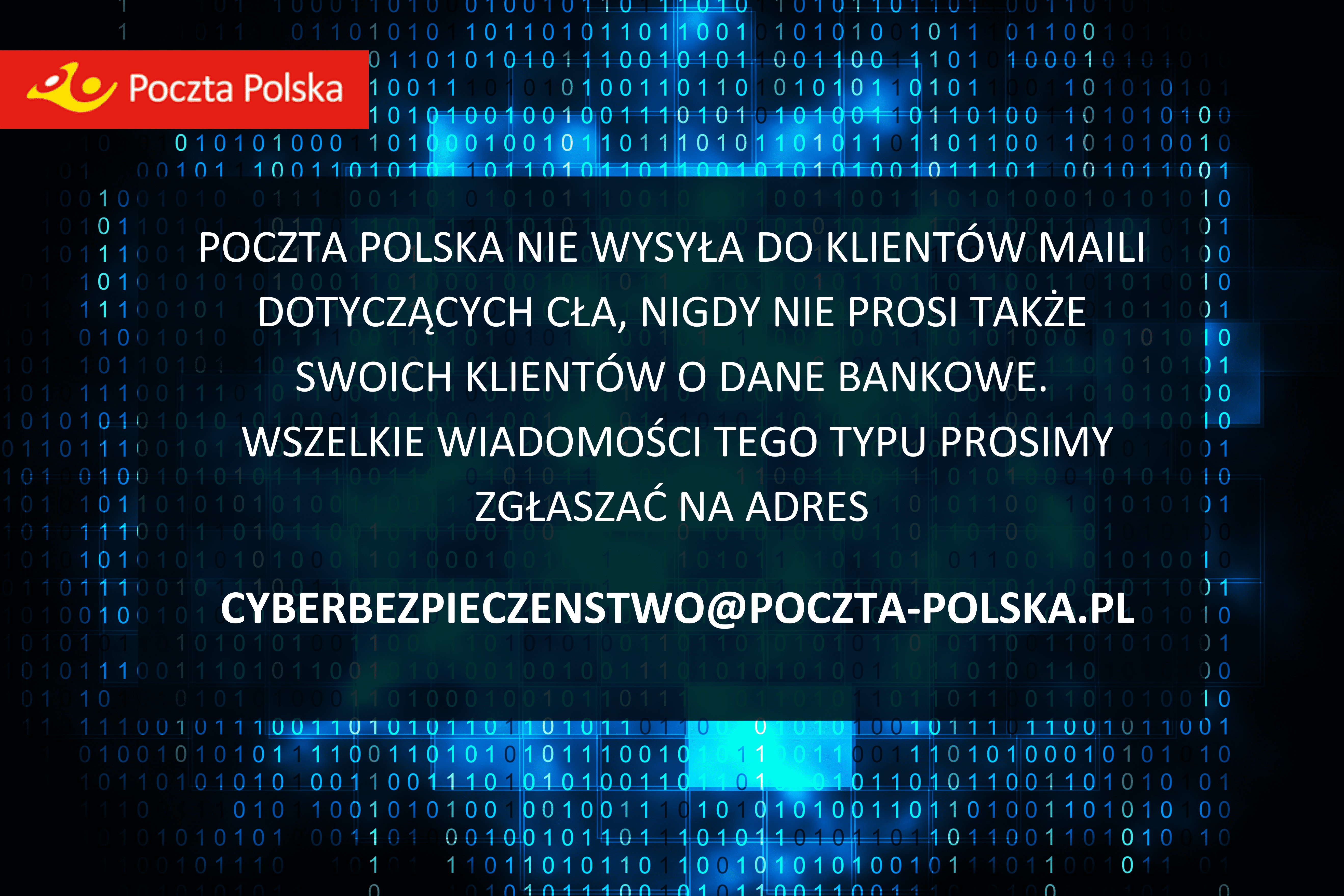
After clicking on an attachment or link in a received message, your computer may be infected with a virus, in this case a Trojan horse, which allows criminals to steal data and take control of your computer. In the case of the latest cybercriminal attack that has been detected, the user may also be asked for login details for banks or other services. This could result in the disclosure of sensitive personal data or even the loss of funds from bank accounts. We categorically clarify that Poczta Polska does not send emails to customers regarding customs and never asks its customers for bank details.
Please report any messages of this type to: jakostytut@poczta-polska.pl or cyberbezpieczenstwo@poczta-polska.pl . Please also forward the suspicious message as an attachment, not as a "forward" message, as this complicates email analysis and delays identifying the perpetrator.
It's worth noting that, as of July 1st of this year, Poczta Polska will take over customs processing for shipments from outside the European Union, becoming the entity filing customs declarations on behalf of the recipient, i.e., the so-called indirect representative. This means that Poczta Polska can file customs declarations on behalf of a customer making a purchase from an online store in Asia.
The new regulations are intended to reduce the scale of unfair competition currently posed to European producers by e-commerce operators from outside the EU, who supply goods to the markets of EU member states, largely without paying customs duties and VAT.