
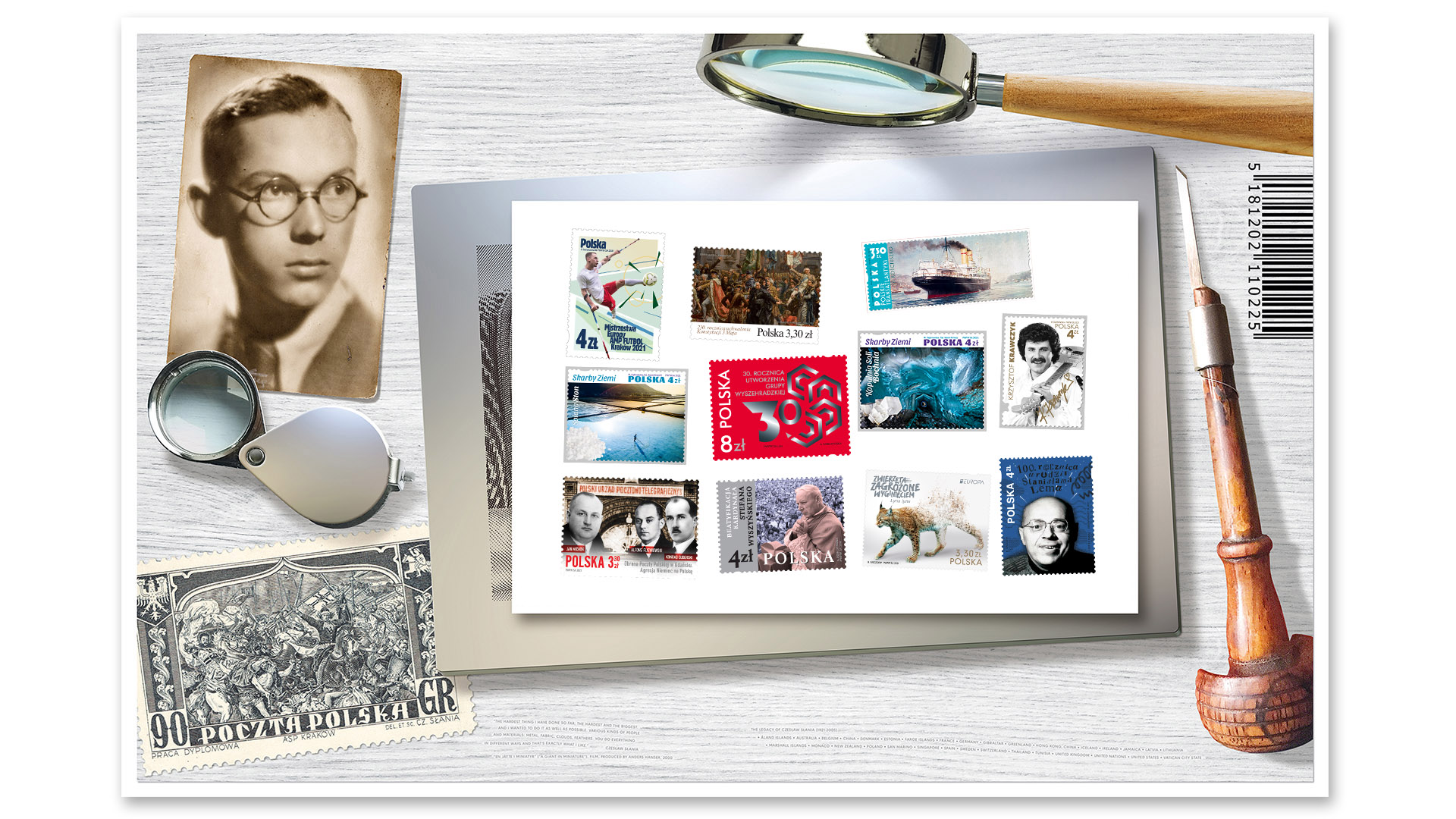
Great art on a small Polish Post stamp: Proembryona Mural
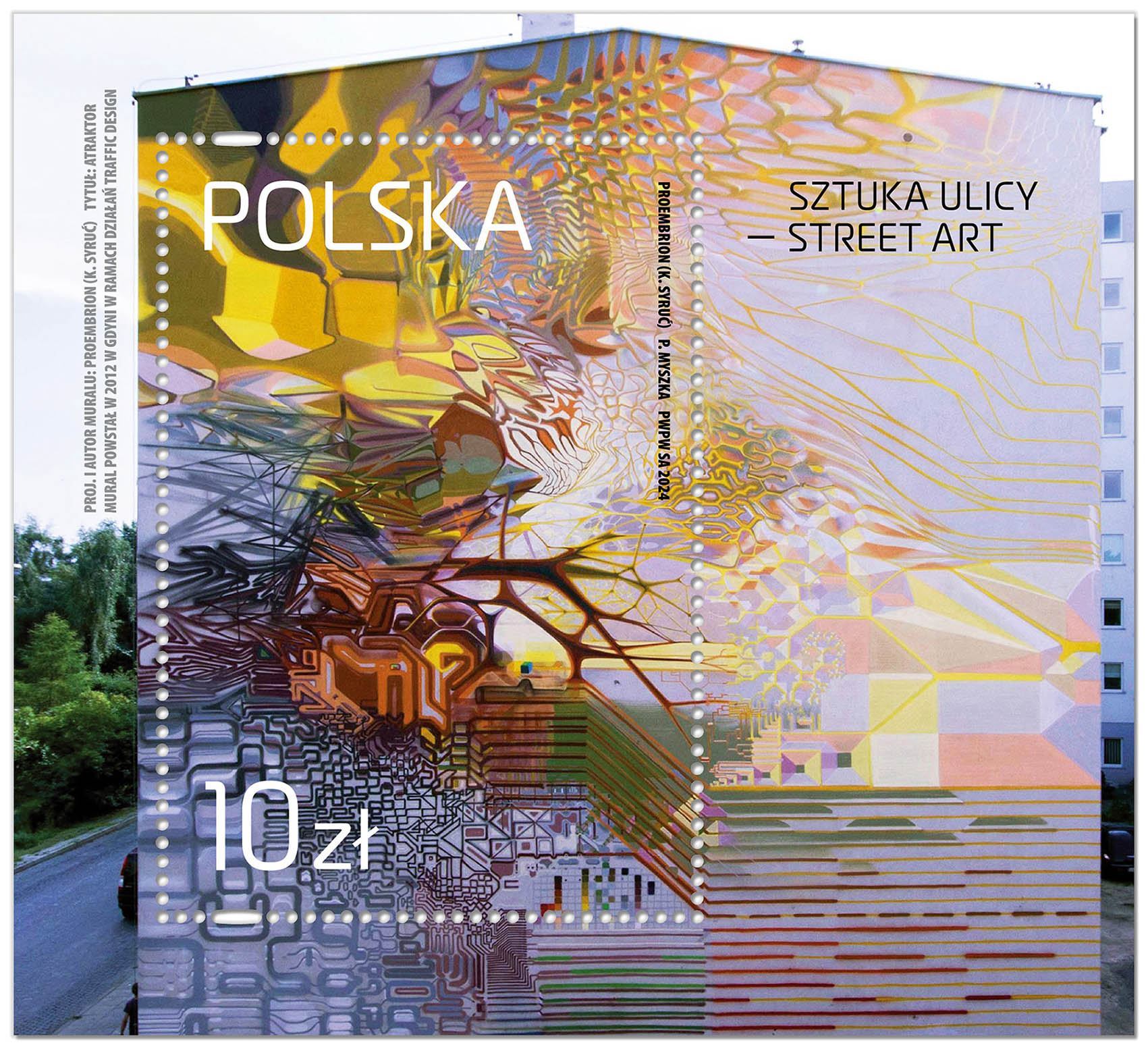
The Polish Post has introduced a unique stamp featuring street art. This is not only an attempt to showcase this dynamic form of artistic expression, but also an opportunity to showcase one of the most interesting works of Polish street art – "Attractor" by Krzysztof "Proembrion" Syruć.
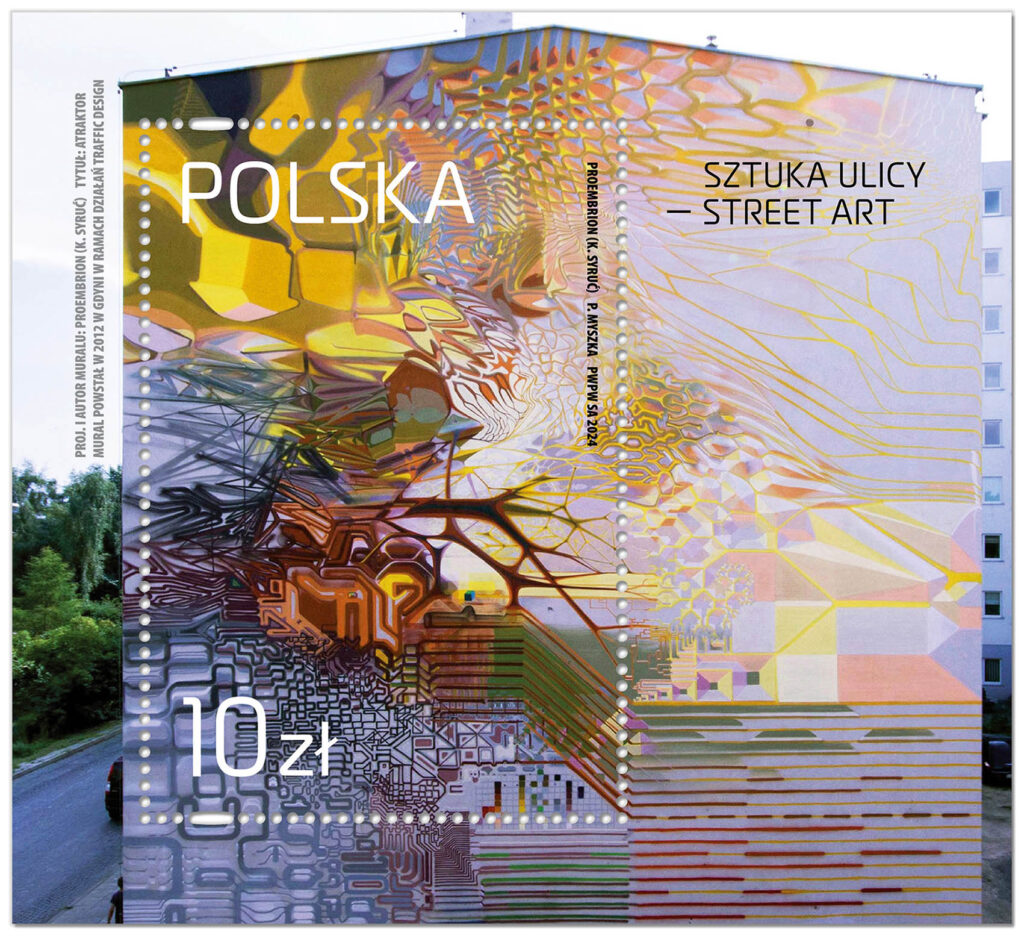
The work "Attractor" was created as part of the Traffic Design festival in Gdynia. The word "attractor" comes from the Latin (attrahere – to attract) and is a term from chaos theory describing the state of a dynamical system tending towards a specific point, curve, or fractal. Fractals are characterized by a complex, self-similar structure, visible in nature, and form the basis of numerous scientific studies in fields such as biology, physics, astronomy, and economics.
Proembrion is known for creating painterly illusions of abstract spaces based on mathematics, color, and generative graphics. He combines geometric elements, biomorphism, and biomimicry. His work has been featured in numerous international exhibitions, and his unique style has evolved from American letterform graffiti into abstract forms, often referred to as graffitifuturism.
Polish street art creators are recognized and valued on the global stage. The history of this art genre in Poland, despite its English-language name, is not a simple reflection of Western cultural trends. Its roots lie in the propaganda struggle against the occupying forces during World War II, when artists and citizens used symbols, slogans, and graffiti as a form of resistance against the Nazi occupiers. These were simple, unambiguous messages intended to boost morale and unite society in the fight.
The 1970s saw the development of neo-avant-garde artistic movements. Artists such as Jerzy Bereś, Edward Krasiński, and Andrzej Partum experimented with form, often engaging in activities that transcended traditional art galleries. They used urban spaces as their canvas, creating works that were both political and critical of the system of the time.
In the 1980s, freedom graffiti became a significant element of Polish street art. During the communist era in Poland, artists used graffiti as a form of resistance. Famous slogans like "Solidarity" and anti-communist slogans appeared on city walls, expressing social discontent and a desire for change.
At the beginning of the 21st century, thanks to the widespread use of the internet, street art in Poland gained a new dimension and became accessible to a wider audience. Artists began to utilize global trends and communication tools, which contributed to the development of this art form.
The Polish Post's stamp issue promotes street art and celebrates the contemporary artistic expressions that adorn our cities and inspire residents. Proembrion's work perfectly captures the spirit of modern art, combining elements of mathematics, color, and innovative graphics. It's a prime example of how street art can find its place even in a space as small as a postage stamp.
The project of this issue was created in cooperation with Marcin Rutkiewicz, president of the Outdoor Art Foundation, an outstanding expert on street art in Poland, author of numerous publications on this subject and curator of many exhibitions.
About the stamp:
Street Art - Street Art
author of the stamp design: Paweł Myszka
author of the mural: Krzysztof Syruć
number of stamps: 1 in a block
value: PLN 10
circulation: 90,000 pcs
printing technique: offset
stamp format: 43 x 62.5 mm
block format: 90 x 82 mm
paper: fluorescent
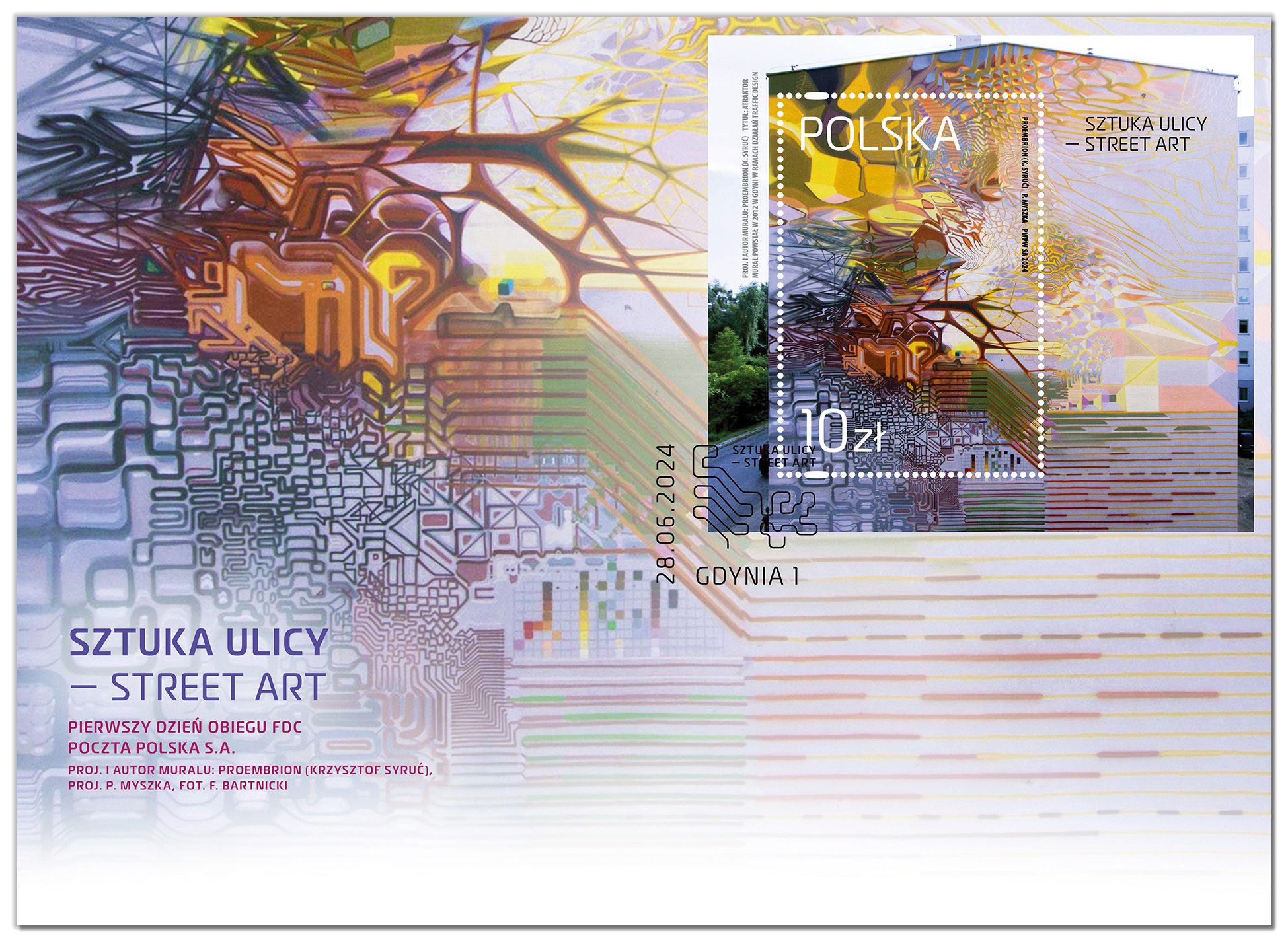
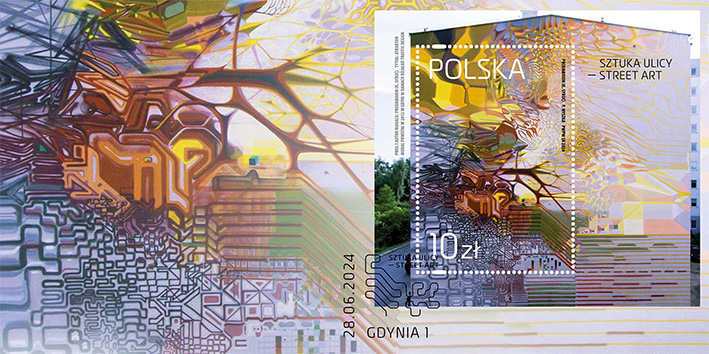
date of introduction into circulation: June 28, 2024